Turn Your Documents Into a Private, Citation-Backed
Intelligence Engine

Doclarity.ai transforms static PDFs, reports, and policies into a secure, queryable knowledge base—so teams find answers in seconds, not hours. Every output is grounded in your curated sources, with clear citations for verification.

What it is

An AI-powered document intelligence platform that lets organizations upload and curate authoritative documents, then search, ask questions, and generate deliverables with source citations.

Who it's for

Small-to-medium teams (typically 5–20 users) in quality/compliance, research & studies, and knowledge management that need fast, reliable answers from internal documents.

Why it matters

Reduces the Search Tax and improves trust by keeping AI responses constrained to your document corpus—no external connectors, no surprises.
Problem vs. Solution

Built for real work

Why Doclarity.ai?

Doclarity.ai exists to eliminate the operational drag of manual document retrieval and verification (“Search Tax”) and the governance risk of uncontrolled “Shadow AI.”

Before

  • Teams waste time hunting across folders, DMS/ECM tools, and email threads—then manually cross-referencing versions.
  • Keyword search misses meaning, context, and synonyms—so people “search harder,” not smarter.
  • Employees turn to public AI tools, risking data leakage and creating unverifiable output that still requires full manual checking.

With Doclarity.ai

  • Upload and curate your authoritative sources once, then search by meaning and filter precisely.
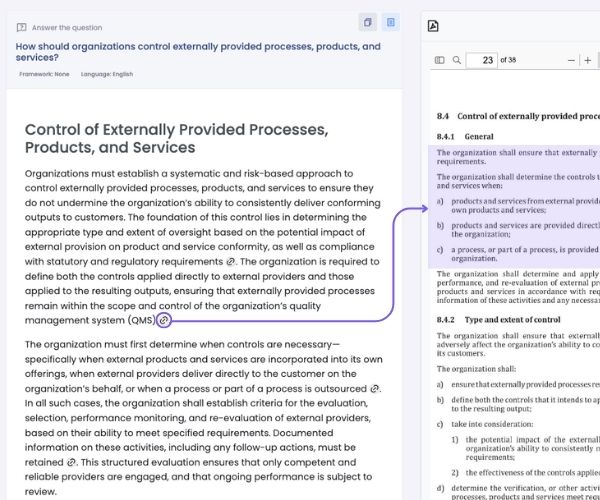
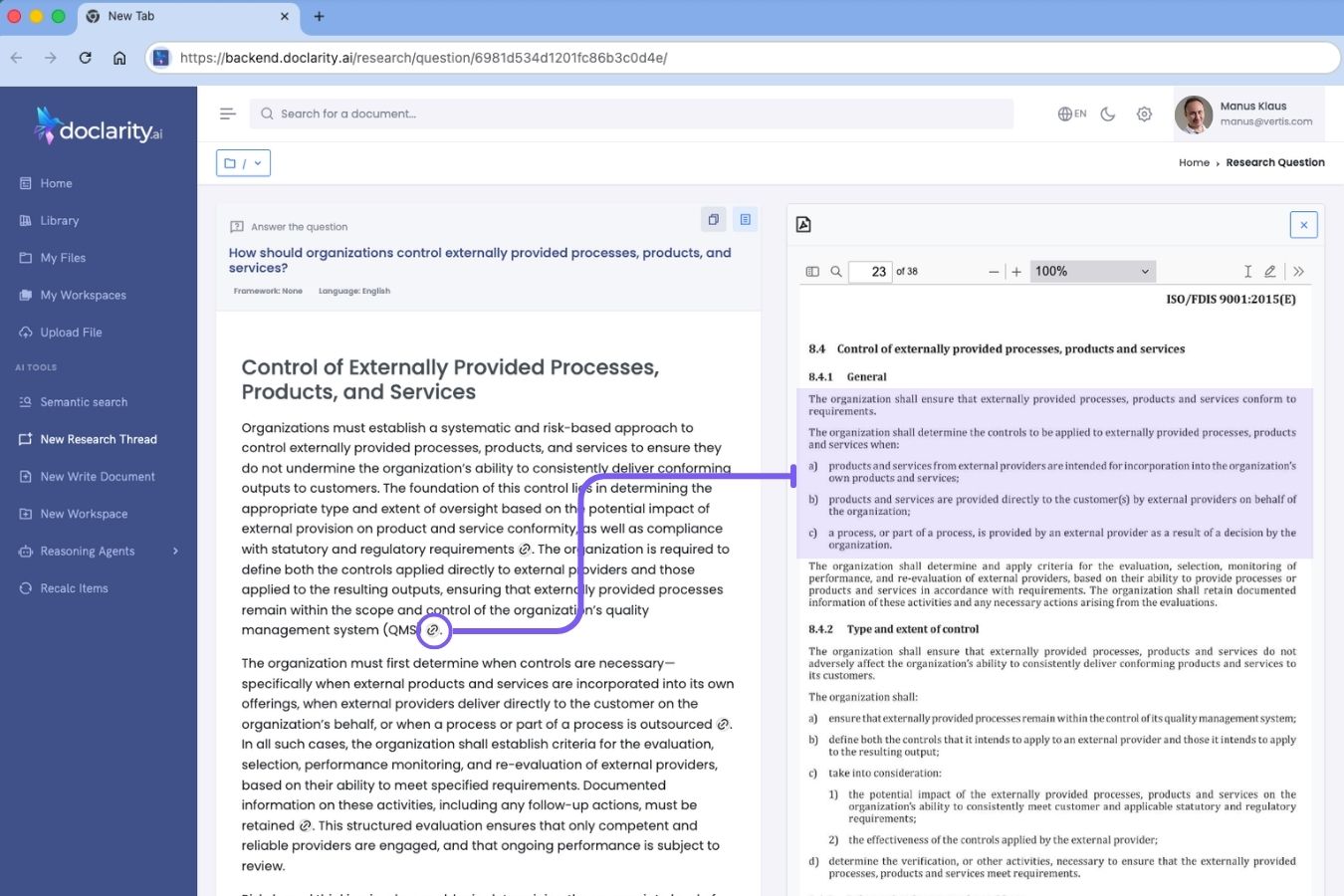
  • Ask questions across your library and get multi-document synthesis with [page-chunk] citations you can verify.
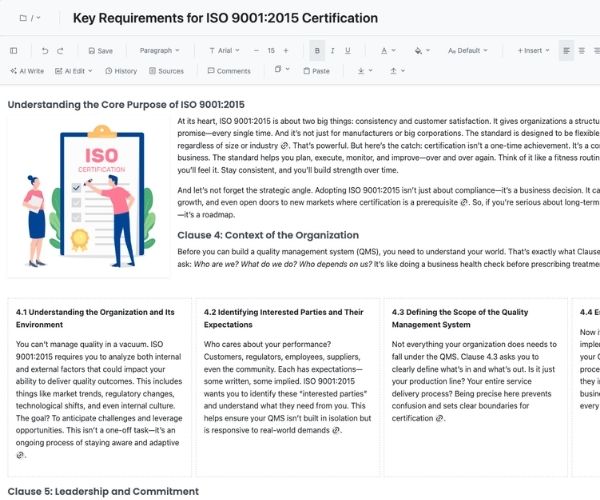
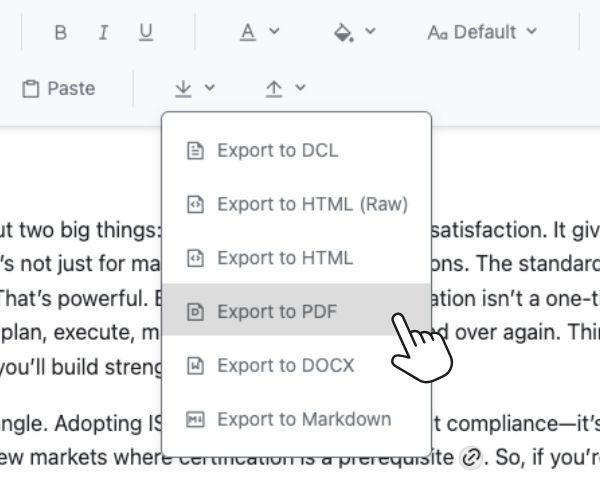
  • Generate structured outputs (briefs, FAQs, executive summaries, more) in a WYSIWYG editor—then export to DOCX/PDF/Markdown.

Benefits

Core Features

What is Doclarity.ai?

Doclarity.ai is a multi-tenant platform that turns your organization’s curated documents into a searchable, secure knowledge base with semantic search, citation-backed Q&A, and AI-assisted writing.
Build a living document library

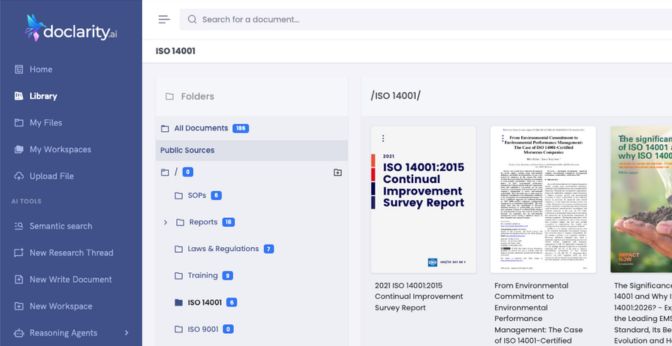
  • Bring Your Own Documents (BYOD): Your team uploads and curates the sources you trust—policies, reports, standards, publications, and internal documentation.
  • Automated processing: OCR for scans, language detection, thumbnails, metadata extraction, classification, and structured organization.
  • Version-aware organization: Track recurring publications and versions, identify current versions, and preserve time context for research.

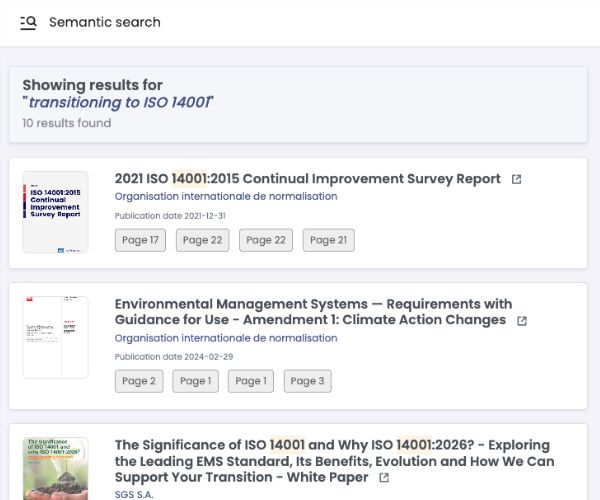
Find answers faster with semantic search

  • Natural language queries that understand intent and context (not just keywords).
  • Hybrid ranking that accounts for relevance plus version currency and freshness.
  • Advanced filtering across rich metadata fields (source, subject, type, date range, language, focus area, more).

Ask questions. Get cited answers.

  • Research Assistant Q&A across your document base with multi-document synthesis.
  • Citations included in a consistent [document-page-paragraph] format for auditability and trust.
  • Thread continuity so research can be continued without losing context.

Write outputs your team can ship

  • Document Writer with streaming generation into a rich editor.
  • Templates + analytical frameworks to produce structured deliverables (summaries, briefs, presentations, FAQs, etc.).
  • Export-ready formats for sharing and reporting.

Go further with Expert AI Agents

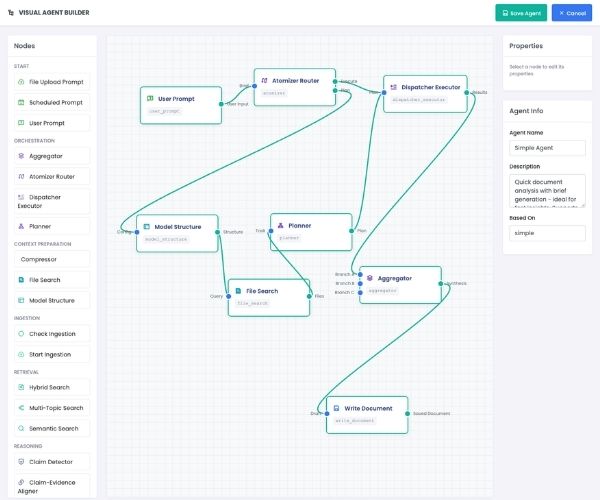
  • A visual workflow builder with specialized nodes for retrieval, reasoning, composition, visualization, and export.
  • Designed for repeatable workflows (e.g., evidence gathering, compliance monitoring, comparative analysis, FAQ generation) with traceability.

Secure by design

  • Multi-tenant isolation with customer-separated collections (including vector collections) and isolated file storage.
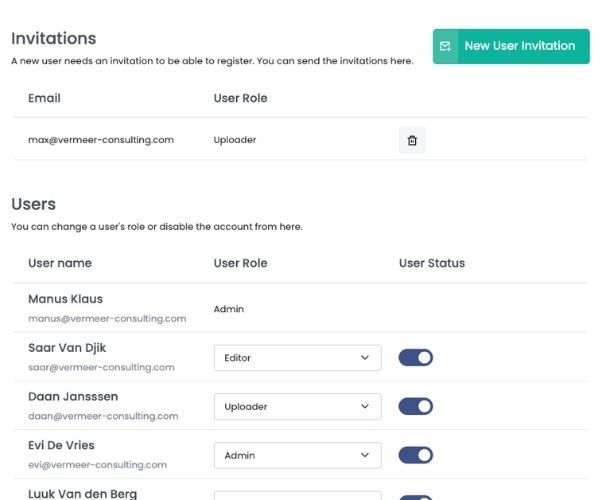
  • Role-based access and document/folder/workspace permission levels to keep sensitive knowledge bounded.
  • Private AI infrastructure: No third-party AI providers for inference; no external data retention; no training on customer documents.

Export and integrate

  • Export to DOCX, PDF, Markdown, plus structured data exports where needed.
  • API-first foundations for integration workflows.

Collaborate with control

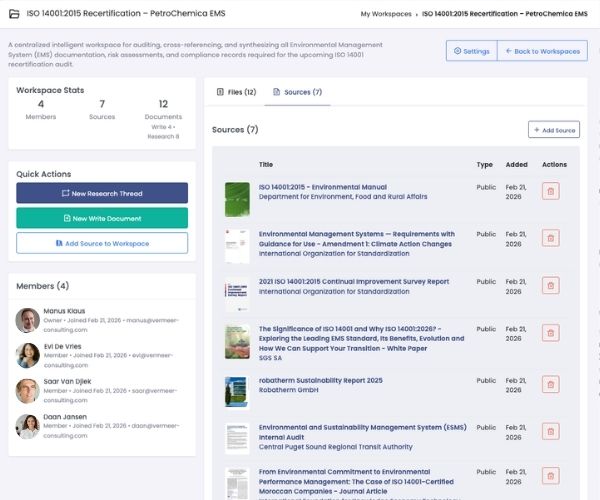
  • Workspaces for teams to focus on subsets of documents and shared research/writing.
  • Real-time collaboration capabilities powered by WebSockets (live updates, concurrent activity patterns).

Questions

Value, built for scale.

Need Help? We’ve Got You.

From pricing to features — here are the answers to your most common questions. No guesswork, just clarity.

How is Doclarity.ai different from a public AI chatbot?

Doclarity.ai is constrained to your curated document library, and outputs include verifiable citations to the exact supporting text. Public chatbots are not bounded to your authoritative sources and typically require heavier manual verification for professional use.

Does Doclarity.ai train models on our documents?

Doclarity.ai is designed so customer documents are not used for model training, and processing occurs on controlled infrastructure rather than third-party consumer AI providers.

How does Doclarity.ai reduce hallucinations in practice?

Doclarity.ai grounds answers in retrieved document chunks and returns [page-chunk] citations, making verification straightforward. If the needed information isn’t supported by the corpus, the workflow is designed to prioritize traceability over guesswork.

Can we control who sees what inside our organization?

Yes—Doclarity.ai supports role-based access and document/folder/workspace-level permissions, with multiple access levels (private, shared to users, workspace, org-wide).

Stop paying the Search Tax Start making decisions from the documents you already trust.

Private Secure Sovereign